Showing posts with label black wealth. Show all posts

Wednesday, November 26, 2008

Creating Consumer Confidence Tips From Boyce Watkins

Dr. Boyce Watkins
www.Boycewatkins.com

If you wish to see a video explaining consumer confidence, which is one of the driving issues behind the recent moves in the stock market, please click here.

This has been an interesting week, with auto execs showing up on private jets to request a bailout from the government and the Dow moving to below 8,000 points for the first time in 5 years. I still hold to the fact that this is a great time to get into the stock market if one has never done so before, especially if you are under the age of 50. By the way - please visit our sponsor, GreatBlackSpeakers.com if you are interested in hiring a top notch African American speaker or seeking to become one.

Take care!
Boyce Watkins
http://www.blogger.com/www.boycewatkins.com
Click here to join our money advice list.

=====================================================================================
If you listen carefully to the words of Treasury Secretary Henry “Hank” Paulson and Ben “Big Ben” Bernanke (chairman of the Federal Reserve) you might notice a trend in their language. The word “confidence” is used a lot when they speak. Many of their monetary proposals are not necessarily valuable for their financial power, but also for their psychological power.

Some of you may wonder what confidence has to do with anything. After all, if you’re broke, confidence doesn’t exactly put money in your pocket. If you’re 100 pounds overweight, confidence won’t help you win the Olympic 100 meter dash. When you are flying on a crashing plane, confidence doesn’t keep the plane from slamming into the ground. But confidence is important to an economy, and one of the most significant drivers of economic growth. In fact, over confidence has driven US economic growth for the past 10 years. Here are some reasons that confidence matters in the minds of Hank and Big Ben:

1) Confident consumers spend money

If you think you might lose your job next year, are you going to max out your credit cards? I certainly hope not. If you are worried about being able to make ends meet, are you going to buy that big screen TV? Not unless you want your wife to leave you. So, even if it doesn’t hold any truth, the mere forecast of a weak economy is enough to make many Americans hold off on consumer spending, one of the great driving forces of the American financial system.

2) Confident companies invest money and hire workers

Investments involve risk. Your hunch may work out, and it may not. If you don’t believe the economy is getting better, you are not going to consider taking that risk. No one plans to go to the beach if the weather man says that it’s going to rain. When economic rain is in the forecast, companies pull out their umbrellas and hold off on new projects. This reduces the number of jobs in the economy, because nearly every job created in America is the result of someone making an investment.

3) Confident Americans do not take their money out of banks

In case you didn’t know, your bank does not have your money. Your money is part of a large base of financial capital that is loaned out to individuals and consumers seeking to get a good return on their investment. So, without investing, your bank would have no interest in paying you any interest at all. So if, say, 30% of all customers of the same bank decide to get their money out at the same time, the bank would have serious financial problems. It is a lack of confidence that could cause customers to “run” on their bank and take out their money.

4) Confident investors keep their money in the stock market

The stock market is a place where fortunes are made and lost. Some part of that fortune is psychological, given that no asset can have a value which exceeds that which someone is willing to pay for it. When investors lose confidence, they take their money out of the stock market, and reductions in demand for stocks lead to massive paper losses in the market. Additionally, most Americans are “momentum traders”, meaning that when the market goes up, they tend to buy more, and when it goes down, they tend to sell. History shows that it is actually the opposite approach that tends to work best.

5) Confident banks make loans

Banks have to keep a certain portion of their funds on hand at all times to meet federal requirements. If they are fearful that their customers might come and demand their cash, they hold onto their capital to ensure that it is available. If they are afraid that their borrowing customers will not be able to repay loans due to a weak economy, they also hold back on issuing new loans. The truth is that when economic forecasts are grim, conservative bankers become even more fearful than the rest of us.

The bottom line of this article is that confidence matters. So, the next time you hear Ben Bernanke give a speech, you can be confident that he is going to use language that makes you feel more secure. Whether you choose to believe those words is up to you.

Dr. Boyce Watkins is a Finance Professor at Syracuse University. He does regular commentary in national media, including CNN, BET, ESPN and CBS. For more information, please visit http://www.blogger.com/www.boycewatkins.com. To join our money list, please click here.

Monday, October 13, 2008

"Black News: Dr Boyce Watkins Explains Credit Reports"


By Dr. Boyce Watkins
http://www.drboycefinance.com/

Where do Credit Scores come from?

Unlike babies, credit scores do not come from a financial stork. There are 3 major credit bureaus in the United States: Experian, Trans Union and Equifax. Companies subscribe to their services to obtain information about you to decide if you are credit worthy or not. Under the old system, the credit scores ranged from 375 to 900. Under the new VantageScore system, they range from 501 to 990. The new system is more consistent among various credit bureaus, so you don’t end up with scores that go all over the place.

How can I get a copy of my report?

I personally go to a site called Myfico.com, where you can order reports from all 3 bureaus or just one. You can also go to freecreditreport.com (you know, the site with the really funny commercials). The law says that you are entitled to at least one free credit report every year. Also, if you are denied credit for any reason, you can write the bureaus, sending along a copy of the rejection letter, and request a copy of your credit report. If you choose to pay for your report, it will likely cost you about $8 dollars.


What factors go into calculating a credit score?

The factors that go into calculating a credit score are a little vague and it’s protected like the recipe for KFC chicken. While the formula is well-guarded, we do have some guidelines on what factors are theoretically used to determine whether or not someone should loan money to you.

The factors are broken into what they call “The Four C’s of Credit”: Character, collateral, capacity, capital and conditions.

Character is their way of trying to decide if you are a good person or not. I don’t agree with this, since having bad credit does not make you a bad person. It just makes you a person who does not have a good track record when it comes to borrowing money.

Capacity is represented mostly by your income level and how much money you’re expected to earn in the future.

Capital is noted by the amount of cash you have in reserves and other liquid assets at your disposal. If you have capital, that means you can withstand a short-term decline in income and still make payments.

Conditions are reflected by the environment in which you live. It might include the state of the economy, your line of work and other external factors that might impact your credit report. For example, during the liquidity crisis in America, conditions for lending are very, very bad.

Now you know where credit scores come from. You probably have more questions, since there is a lot of ground to cover. To get more information, please feel free to learn along with me and my students by visiting http://www.drboycefinance.com/.


Dr. Boyce Watkins is a Finance Professor at Syracuse University. He does regular commentary in national media, including CNN, ESPN, BET and CBS. For more information, please visit www.BoyceWatkins.com

Wednesday, October 8, 2008

Dr Boyce Watkins: Fighting with Bill Collectors


One of the groups that was not bailed out during the recent financial crisis has been the American consumer. Congress took care of the firms on Wall Street, but they didn’t take care of the millions of Americans forced to confront the realities of bankruptcy, foreclosure and uncomfortable confrontations with menacing bill collectors. It appears, sadly, that every man and woman must find their own way through this financial tragedy.

Bill Collectors really want their money, like the rest of us. Some of them seem to feel that it’s O.K. to resort to flat out thuggish intimidation to get their money back. That might work on The Sopranos, but it shouldn't work in real life.

Part of the reason abusive bill collectors can have their way with the public is because many citizens do not know their rights. Bill collectors prey on the uninformed in a terrible way: They may threaten to have you arrested, harass your relatives, call all hours of the night, and engage in other types of atrocious behavior to get their money out of your hide.

One woman successfully sued a rogue bill collector after he called her repeatedly with threatening language. The woman, a senior citizen, was told by the man to "Stop with the sob stories and pay your god d*m bill!" This kind of behavior is not acceptable, and bill collector harassment doesn’t have to keep you up at night.

The Federal Trade Commission states that complaints against bill collectors are rising, reaching the highest level they've seen in the past 3 years. Most of the complaints focus on vulgar language, trying to collect more than the amount of the true debt, and extra fees, such as court costs.

You have rights that can protect you from bad and malicious bill collectors. You want to keep these in mind as you work yourself out of debt:

1) There is something called "The Fair Debt Collection Practices Act". If you are not familiar with this document, get familiar with it. You can read it by clicking here.

2) A bill collector cannot contact you at work if your employer does not approve of the contact. Let the bill collector know that this is the case and they must legally stop contacting you at your job.

3) Bill collectors cannot call you before 8 am or after 9 pm. The only exception is if you give them permission to do so.

4) A bill collector can only contact your friends and family if they are trying to find a way to get in touch with you. However, some of them may do this in order to harass or embarrass you. If that is the case, you may want to tell your friends to tell the bill collector, "She does not live here and I do not know how to get in touch with her. Please don't call here anymore." Then, get the bill collector's information from your friend and reach out to them when you can.

5) You can get bill collectors to stop contacting you altogether by sending them a letter telling them to stop. You still must pay the debt, but they won't be calling you during dinner.

6) The bill collector cannot curse at you or use foul language and they must tell the truth about how much you owe. They cannot threaten to sue unless they are serious about it, and they can't touch your 401k or IRA.

7) If the bill collectors call you, you can demand that they send you a written notice of the amount you owe and who you owe the money to. If you do not believe that the debt is yours, you can write a letter to them stating that this is not your debt. They must then send you proof that the debt is actually yours.

If you feel that a debt collector has violated any of these rules, you can contact the Federal Trade Commission at www.ftc.gov. Remember that you are not powerless in this situation.

Dr. Boyce Watkins is a Finance Professor at Syracuse University and author of Financial Lovemaking 101: Merging Asset with Your Partner in Ways that Feel Good. He does regular commentary in national media, including CNN, CBS, NBC and BET. For more information, please visit www.BoyceWatkins.com. This information does not constitute legal advice. For legal advice, please consult your attorney.

Friday, April 25, 2008

Condoleeza Rice Speaks Candidly on Race in America

Sen. Barack Obama has called for a national discussion on race in America, and one of the folks who sure didn't hold back when asked was Secretary of State Condoleezza Rice.
This was sent to YourBlackWorld from someone simply named "Robert". But we found the piece compelling and wanted to share it with our readers.


In a discussion with the editorial board of the Washington Times on Thursday, Rice called racism a "birth defect" of America, and said that black Americans have loved the nation even when it didn't love us.

The Times reported:

"Black Americans were a founding population," she said. "Africans and Europeans came here and founded! this co untry together - Europeans by choice and Africans in chains. That's not a very pretty reality of our founding." "As a result, Miss Rice told editors and reporters at The Washington Times, "descendants of slaves did not get much of a head start, and I think you continue to see some of the effects of that."

"That particular birth defect makes it hard for us to confront it, hard for us to talk about it, and hard for us to realize that it has continuing relevance for who we are today," she said.
Rice later said: "America doesn't have an easy time dealing with race," Miss Rice said, adding that members of her family have "endured terrible humiliations." "What I would like understood as a black American is that black Americans loved and had faith in this country even when this country didn't love and have faith in them - and that's our legacy," she said.

Wow, was all I could say to that.

What was even more stunning was the relative lack of coverage on this issue. I was told CNN's "The Situation Room" did a piece on her comments Friday. But when I surfed the Net to see follow-up stories in other papers, it has pretty much been ignored, except for some briefs.
Why would the mainstream media be so dismissive of Rice's comments? Imagine if Rev. Al Sharpton or Rev. Jesse Jackson Sr. said such a thing. Do you think they would have gotten ripped?

The fact of the matter is that Rice was right on the money with her comments, and should be commended. She spoke honestly and openly about the issue, and deserves credit for speaking the truth.

I just wish my colleagues in the media would do a better job at advancing the issue of race in America and our sordid history.

We went bonkers about the Rev. Jeremiah Wright, but when Rice, the nation's chief diplomat, spoke truthfully, it barely made a ripple.

Romans 8v28
And we know that all things work together for good to them that love God,
to them who are the called according to his purpose.*

Friday, April 11, 2008

Oprah Winfrey vs. Bob Johnson: How to be a Billionaire the Non-BET Way


By Dr. Boyce Watkins
www.BoyceWatkins.com

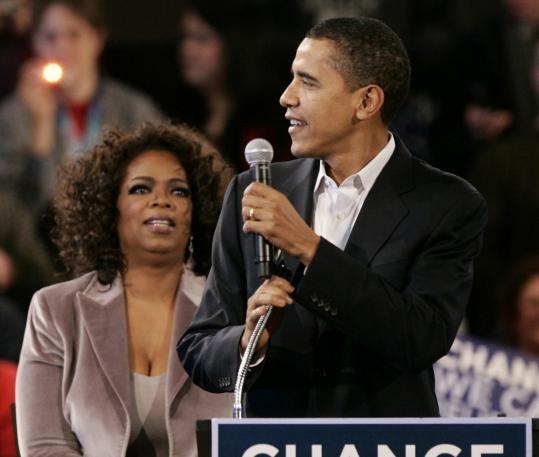
Oprah Winfrey’s support for Senator Barack Obama, while certainly admirable, has cost her some support among fans. According to a recent poll, Winfrey’s approval rating was 74% before the election, dropping to 61% after turning her support toward Obama. At the end of the Jeremiah Wright controversy, her approval rating dropped further to 55%.

I admired Oprah a great deal for stepping out in support of Senator Obama. I also knew that she would pay the greatest price for this bold political move. What surprised me about Oprah’s support for Senator Obama was the fact that she was willing to do damn near the exact opposite of what made her a billionaire: take political sides in a nasty race. She also had the audacity to support a highly qualified black man over a well-respected, powerful woman. When reporters asked me about Oprah’s decision to step out on the limb of controversy, I simply said “Damn, I thought I was the only one crazy enough to do things like that. Oprah’s going to get fried for it.”

Entertainment is based on popularity. The more of a jelly-like spine you have, the better off you’re going to be. You have to be able to move with the crowd and makes folks feel good. DL Hughley from Def Comedy Jam even appeared on several shows referring to the black women from Rutgers University as “Nappy Headed Hoes”, all so he could build a little extra fame on the back of a very serious issue. Entertainment moguls like Oprah Winfrey and Bob Johnson are the best when it comes to telling people exactly what they want to hear, and they’ve become quite wealthy for it.

But it is Oprah’s willingness to take a serious stand on critical social issues that will serve as the dividing line between the legacies of billionaires Winfrey and Johnson. Oprah will be celebrated and remembered 100 years from today. People will only think that “Bob Johnson” is the name of an exotic sex toy. Johnson’s time capsule will contain DVDs of BET (Booties, Exploitation and Thugs) videos, while Oprah’s capsule will contain pictures of the young women attending the school she built in Africa. I am not a woman, but even I am empowered by someone who stands up so firmly for women’s rights. So, I give a big “You go girl” to Oprah for doing something that many wealthy black entertainers with predominantly white audiences are not quite willing to do.

At the same time, it was Oprah’s decision to be a BLACK woman (not just a woman) and support Barack Obama over Hillary Clinton that led to the backlash from her audience. Simultaneously, it was Bob Johnson’s allegiance to Senator Clinton that led to him being compared to Uncle Ruckass, the first class Uncle Tom from the TV show “The Boondocks”. Both billionaires shifted away from their policies, and both of them are getting hammered for it.

Oprah and Bob were reminded of a valuable lesson: Popularity and politics just don’t mix.

People don’t pay their black entertainers to take political stands. They pay them to dance, sing and make jokes. One can’t wear the white suit of entertainment and swim in the dirty waters of racially-divisive American politics.

One thing I know about money is that it can empower and liberate you. The problem is that money can also enslave you. Many black professors at top white universities fear losing their precious jobs if they speak out on social injustice. So, we spend our entire careers writing research papers that no one ever reads, while a world that starves for our intellect dies around us. There are hoards of angry black middle class Americans who fear opening their mouths because they won’t be able to keep up the payments on the Lexus. We all understand, on some level, the tradeoffs that Oprah, Johnson and Obama are forced to make.

One of the great dilemmas of the black experience is that we judge one another on our ability to obtain wealth, power and popularity, three things in short supply in our community. Rather than asking WHY Bob Johnson has a billion dollars, we presume that he is a great man only BECAUSE he has a billion dollars. Our measuring stick for success is one that provides prominence and respect to those who’ve been most willing to sell their soul to obtain scarce social resources. This creates a sticky set of incentives, as we keep our eyes on the carrots while taking our eyes completely off the prize.

You (Barack Obama) can’t get elected with 13% of the vote, so you are forced to engage in a disturbing amount of diplomacy and “bridge building”. You even become the only major politician to not show up in Memphis on the 40th anniversary of Martin Luther King’s assassination. In addition, you are asked to denounce a different black male associate nearly every week, while your opponents have equally questionable affiliations that receive no attention from mainstream media.

You (Oprah Winfrey) are a TV mogul who can’t earn a billion dollars from your black audience, so you build a predominantly soccer mom constituency that will penalize you for supporting a black presidential candidate. The audience helps you pay the bills, as long as you keep feeding them more Dr. Oz and Dr. Phil without even considering building shows for many black experts across the country who DO NOT have that annoying country accent.

You (Bob Johnson) can’t quite get your message onto a mainstream TV network, so you create a network for African-Americans and spend 20 years feeding them nothing but naked women, gold grills, jock-grabbing “gangstaz” with guns and other profitable garbage. You don’t feed garbage for the survival of the network; you feed it because you want to have a billion dollars instead of 100 million. That’s what makes you a “playa”.

The sacrifices are great, and it is my argument that we should not only question the merits of the sacrifice, but also whether the rewards are as valuable as they seem. For every billion dollars of income earned by Bob Johnson, I speculate that there is at least another two billion dollars in lost productivity from a generation of kids who memorized the lyrics from “Back that Ass Up” before they began kindergarten.

Perhaps it is time to reconsider our social currency.

Does Cornel West have to be at Harvard to be important, or will we respect him at an HBCU?

If Barack Obama loses the presidency for refusing to condemn another black man, will he get as much respect from his Black Home as he would from the White House?

Oprah Winfrey and Barack Obama, to a measured extent, have earned my respect for putting their vast social capital on the line. As a Finance Professor, I understand Bob Johnson, since I have taught thousands of Capitalists to analyze money.

But one thing I know about money and democracy in a racist society is that if you measure your success by wealth, power and popularity, you end up with a Pandora’s Box of contradictions that keep you up all night and on the toilet all day.

Life is too short to work so hard on things that don’t matter. Perhaps we should set new standards.

Video: Dr. Boyce Watkins Speaks on Oprah Winfrey and Barack Obama